October 2026
What Real-Time Financial Tracking Actually Changes on a Construction Project
There is a specific kind of dread that comes with opening a monthly financial report on a construction project and realizing a variance has been building for weeks without anyone catching it. Nobody did anything wrong exactly. The numbers were tracked, just not often enough, and not in a way that gave anyone the chance to catch the drift while it was still small.
This is the basic problem with financial reporting that only happens on a monthly or quarterly cycle. It is not that the numbers are wrong, it is that by the time anyone sees them, the window to do anything easy about a problem has usually already closed.
Tracking finances as they happen, not after the fact
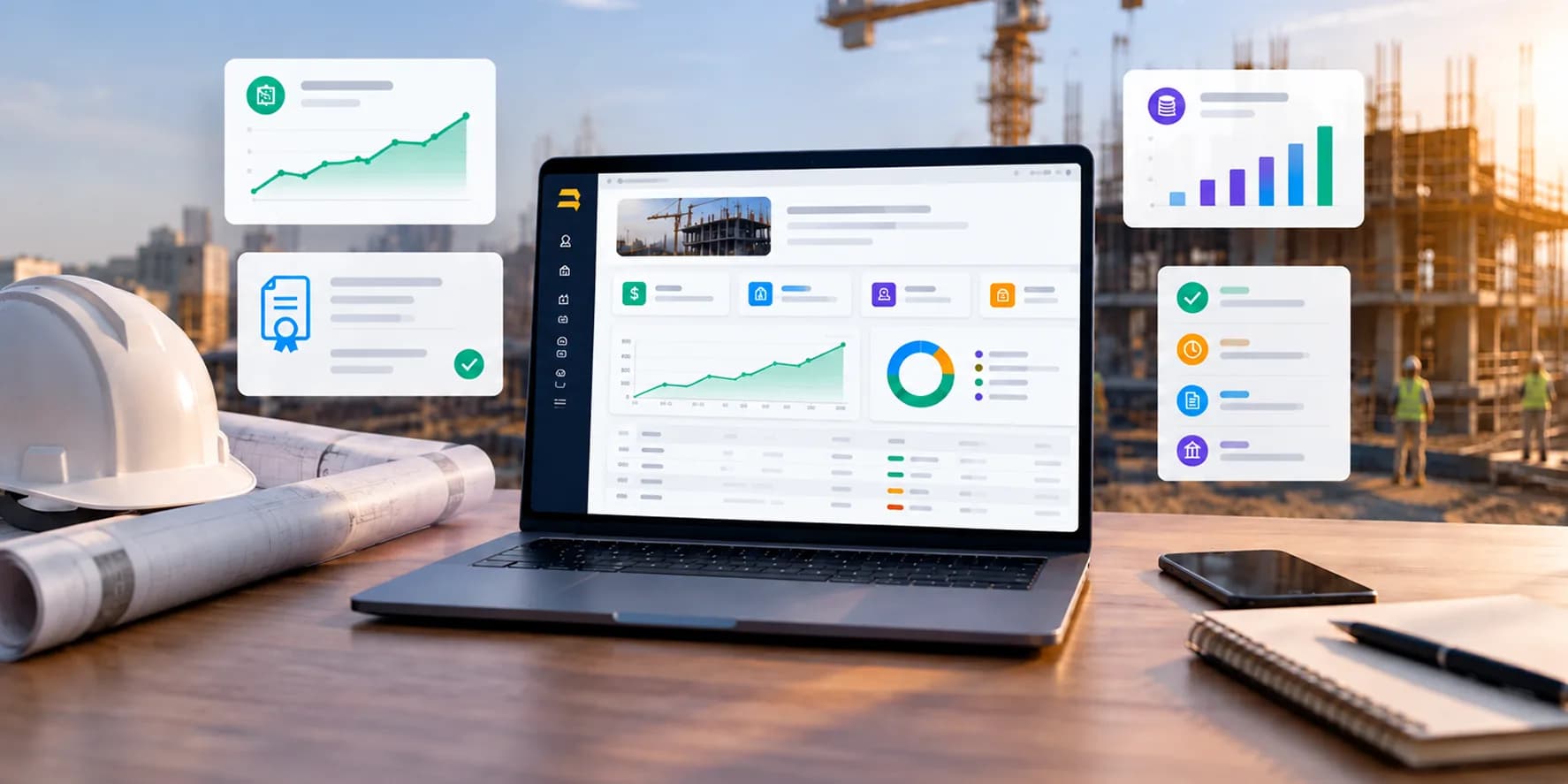
Builtric's finance functionality tracks project finances, generates certificates, and manages cashflow in real time. That single shift, from periodic reporting to continuous tracking, changes what is actually possible for the people responsible for a project's budget. Instead of waiting for a report to be compiled, a project's financial position is visible as it changes.
Real-time tracking matters most in the moments when a small variance is still small. A cost overrun caught a few days in is usually a manageable adjustment. The same overrun left to compound for a month is a much harder conversation, and often a much more expensive one to fix.
Certificates and cashflow inside the same system
One detail that makes a real difference is that certificate generation and cashflow management live inside the same platform as the rest of a project's data, not in a separate finance tool that has to be reconciled against everything else. When a certificate is generated, it is grounded in the same underlying project data that procurement, project management, and HSE are already working from, rather than being assembled separately and cross checked later.
This is part of what Builtric's packages describe as end-to-end IPC and advanced handling, meaning Interim Payment Certificates are managed from start to finish inside the platform rather than being pieced together from documents scattered across different systems.
Why this matters more as projects get larger
The value of real-time financial visibility scales with the size and complexity of what is being managed. A single small project might get by with monthly reconciliation. A portfolio of dozens or hundreds of active contracts cannot, because the number of places a variance could quietly form multiplies with every additional project.
This is reflected in how Builtric clients managing large portfolios describe the shift. One client overseeing civil works across more than 200 villages credited the platform with the clarity to optimize both financial and physical progress by unifying data into a single, reliable view, which significantly reduced billing timelines. Another client, the Metropolitan Corporation Lahore, pointed specifically to the ability to track spend variations against projections, describing it as keeping their high-value projects aligned with their fiscal goals and ensuring total financial accountability.
Financial data that stays comparable across projects
A recurring challenge for any organization managing more than one project is that financial reporting can end up looking slightly different depending on who is producing it. Builtric's dashboard and reporting functionality covers project progress and financials and contract health, giving every project a consistent way to report its numbers rather than leaving format and detail up to individual teams.
That consistency is what actually makes portfolio level financial oversight possible. A dashboard is only useful for comparing projects if every project is reporting through the same structure, using the same categories, updated on the same real-time basis.
The real value of catching things early
None of this means a construction project will never run into financial trouble. Costs will vary, certificates will need adjustment, and cashflow will occasionally get tight. What real-time tracking actually delivers is not the absence of problems, it is the ability to see a problem while it is still small enough to solve without a difficult conversation later.
See how Builtric gives your project real-time visibility into cost, certificates, and cashflow.