October 2026
Which Version of That Document Is Actually the Current One
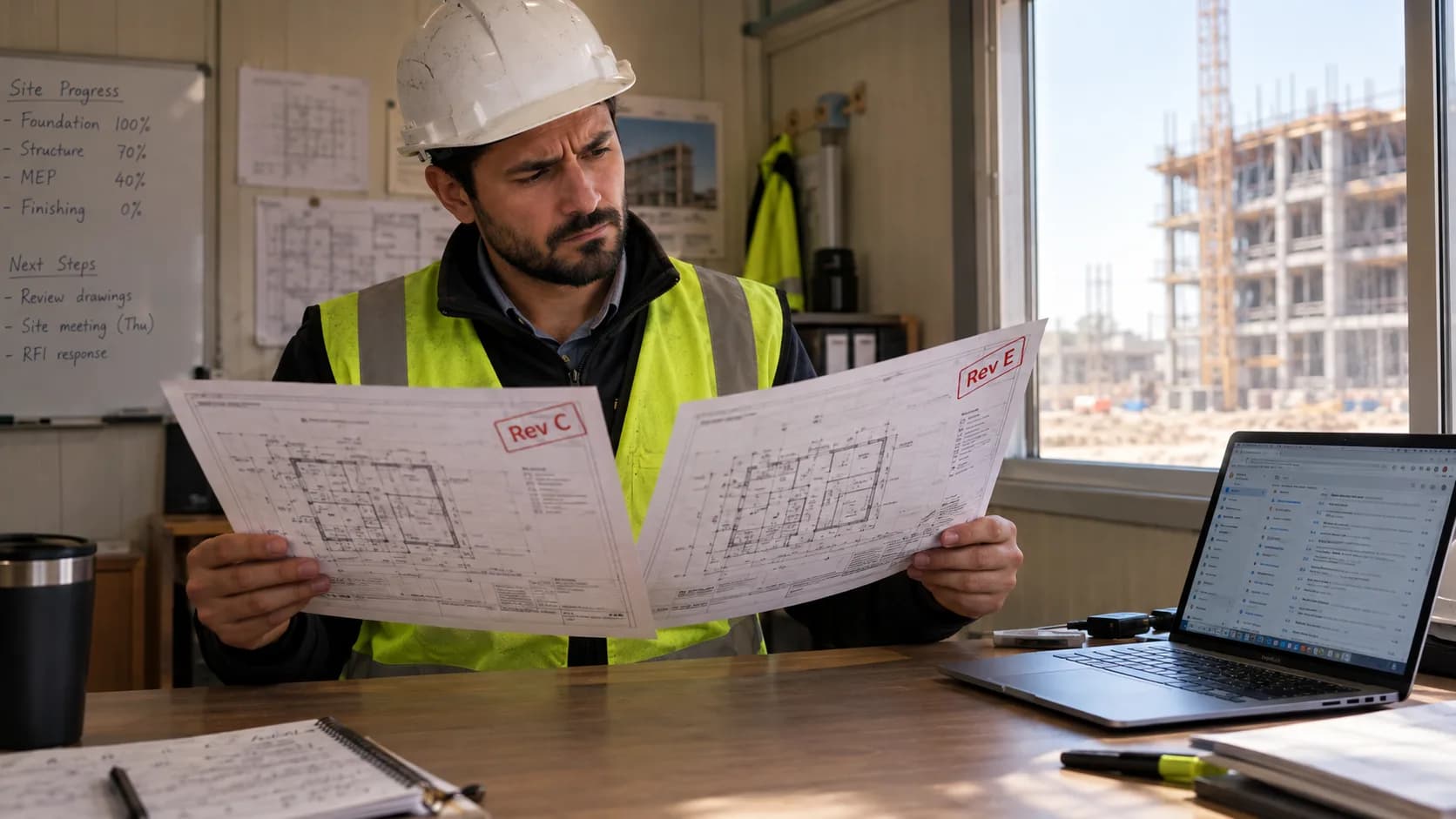
Every construction project eventually runs into this moment. Someone pulls up a drawing, a spec sheet, or a contract document, and asks the question that always causes a small pause: is this the latest version, or is there a newer one sitting in someone else's inbox that nobody has forwarded yet.
It sounds like a small problem until it isn't. A decision made off an outdated document can ripple through procurement, inspections, and payment certificates before anyone realizes the mistake, and by then it is a lot more expensive to fix than it would have been to just check the right file in the first place.
Storing project data so the question does not come up
Builtric's data management functionality stores and organizes project files and records with consistent version control and data integrity. The idea is straightforward: instead of documents living across email threads, shared drives, and individual laptops, they live in one system where version history is tracked automatically, so there is only ever one answer to which version is current.
That matters across every part of a project, not just documents in the traditional sense. Contracts, inspection records, purchase orders, and certificates all depend on people working from the same, current information. When that information is scattered, small inconsistencies build up quietly until they show up as a real problem, usually at the worst possible time, like during a certificate review or a compliance audit.
A centralised item master, not five different spreadsheets
Builtric's packages describe a centralised item master as part of its master data management functionality, alongside user and contract management. In practice, this means the items, materials, and cost codes used across procurement, finance, and project management all reference the same underlying data set, rather than each team maintaining its own version of what should be shared information.
This sounds like a small technical detail, but it solves a genuinely common problem. When procurement is working from one list of items and finance is working from a slightly different one, reconciling the two takes time and often surfaces discrepancies that have nothing to do with the actual work, just with how the data was recorded in two different places.
Why this becomes more important as a portfolio grows
A single, well organized project can sometimes get by on manual diligence. A portfolio of dozens of projects cannot, simply because the number of documents, versions, and data points multiplies with every additional site. Builtric has been used to manage contracts across nearly a thousand individual agreements, representing well over a billion dollars in total project value, a scale where manually tracking document versions and item data across every project would be close to impossible to do reliably.
This is also where the platform's enterprise technology partnerships matter. Built on infrastructure from Oracle, AWS, Autodesk, and Microsoft, Builtric brings enterprise-grade security and reliability to how project data is stored, which is a meaningfully different proposition than data spread across personal devices and shared folders with no consistent backup or access control.
What this actually protects
Good data management is rarely something anyone notices when it is working well. Nobody celebrates the fact that the contract everyone is looking at is definitely the current one. But the moment it fails, when two teams are working from different versions of the same document, or a certificate references outdated item pricing, the cost of that gap becomes very visible very quickly.
Keeping project data in one place with real version control does not make a project more exciting to manage. It just means fewer moments where someone has to stop, double check which version they are looking at, and hope they guessed right.
See how Builtric keeps your project data organized, current, and consistent across every team.